


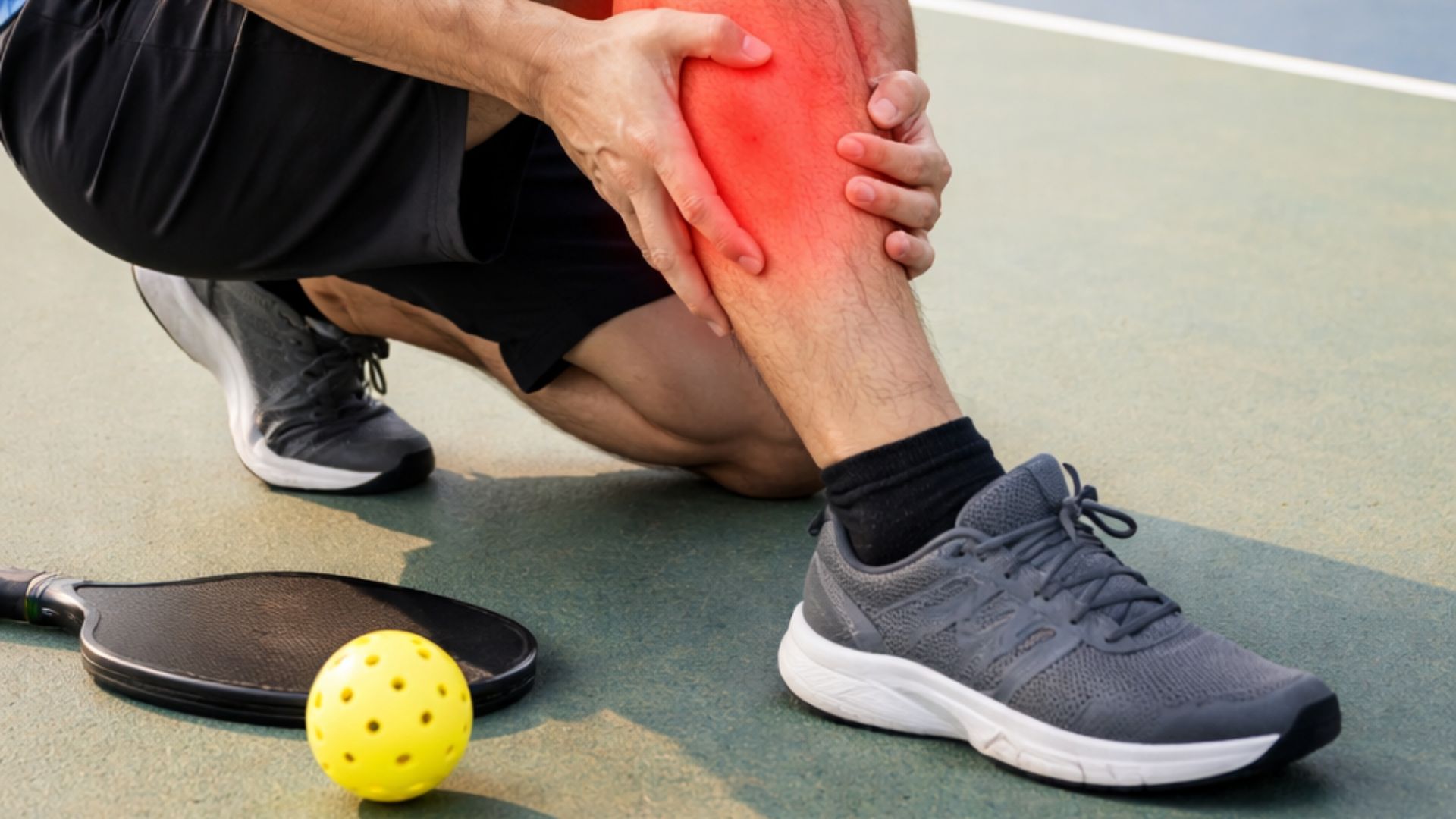
If you have ever felt a sudden sharp pain in the back of your lower leg mid-rally, perhaps while lunging forward to return a dink or pushing off hard during a side shuffle. You are not alone. Calf injuries are among the most common musculoskeletal complaints seen in pickleball players, and clinics across Singapore have reported a significant rise in pickleball-related injuries in recent years, with some reporting patient numbers doubling as the sport has surged in popularity.
Pickleball may appear gentler than tennis or squash, but it places surprising physical demands on the lower body. The explosive bursts of speed, rapid changes in direction, and repeated push-off movements can overload the calf musculature, particularly in players over 40, or those who have picked up the game without adequate conditioning.
This article, written from a sports medicine perspective, explains what a calf injury in pickleball actually involves, how it is graded and diagnosed, what treatment options are available, and, most importantly, when you should see a specialist rather than simply resting at home.
What Is a Pickleball Calf Injury?
The calf is made up of two primary muscles: the gastrocnemius and the soleus. The gastrocnemius is the larger, more superficial muscle visible at the back of the leg; it crosses both the knee and ankle joint and is responsible for powerful push-off movements. The soleus sits beneath it and plays a key role in sustained walking and posture control.
Both muscles merge into the Achilles tendon, which attaches to the heel bone (calcaneus). When we talk about a “calf injury” in pickleball, we are typically referring to:
- A calf muscle strain: a partial or complete tear of the gastrocnemius or soleus fibres
- A “tennis leg” injury: a classic term for a mid-substance tear of the gastrocnemius, often felt as a sudden “pop” or “snap” sensation in the calf
- Achilles tendon strain or tendinopathy: an overuse injury affecting the Achilles tendon at or just above the heel
- Achilles tendon rupture: a more severe, complete tear of the tendon requiring urgent assessment
According to sports medicine research published in the journal Current Sports Medicine Reports, strains of the gastrocnemius are among the most commonly reported acute injuries in racket sports, and pickleball is no exception given its high demand for explosive lower-limb movements.
Why Pickleball Causes Calf Injuries
Several biomechanical factors make pickleball particularly demanding on the calf muscles:
1. Explosive Acceleration and Deceleration
The nature of pickleball, with its short court and fast ball exchanges, requires players to accelerate rapidly, stop suddenly, and change direction multiple times per point. Each push-off movement generates significant force through the calf and Achilles complex.
2. Lateral and Forward Lunging Movements
Retrieving shots at the kitchen line or chasing down angled returns involves wide lateral steps and forward lunges. These positions place the calf muscles under eccentric load (lengthening under tension), which is the most common mechanical cause of muscle fibre tears.
3. Older Player Demographics
Pickleball has become particularly popular among adults over 40 in Singapore. Muscle elasticity and tendon compliance naturally reduce with age, making the calf musculature more vulnerable to sudden overload, especially in players who have transitioned from lower-intensity activities or have not conditioned specifically for court sports.
4. Inadequate Warm-Up and Court Footwear
Many recreational players underestimate the physical demands of pickleball and begin play without a structured warm-up. Wearing improper footwear such as running shoes on an indoor court can also contribute to poor energy transfer and increased strain on the lower limb.
Symptoms of a Calf Injury: What to Look Out For
Calf injuries in pickleball can vary significantly in severity. Understanding the warning signs helps you assess whether the situation warrants immediate medical attention.
Common Symptoms
- Sudden, sharp pain in the back of the lower leg during play, often described as a “pop” or “kick” sensation
- Swelling, bruising, or visible deformity along the calf or Achilles tendon
- Tenderness when pressing on the calf muscle belly
- Difficulty walking normally, or an antalgic (limping) gait
- Tightness, cramping, or weakness in the calf when trying to stand on tiptoe
Red Flags: Seek Urgent Assessment
The following symptoms may indicate a more serious injury, including an Achilles tendon rupture, and should prompt early consultation with a sports medicine doctor:
- A loud “pop” sound at the time of injury followed by an inability to bear weight
- A visible gap or hollow along the Achilles tendon
- Severe swelling in the heel area extending up the back of the leg
- Complete inability to rise on the toes of the affected leg
If you are experiencing any of these red flags, do not delay seeking assessment. Early diagnosis significantly affects long-term outcomes. You can learn more about tendon injuries and the range of conditions we manage at MSMC.
How Calf Injuries Are Graded
Sports medicine clinicians typically classify calf muscle strains into three grades:
Grade 1: Mild Strain
Minor microtears in the muscle fibres. The player typically experiences localised calf tightness or aching but can continue weight bearing. Recovery is generally expected within 1 to 3 weeks with appropriate management.
Grade 2: Moderate Partial Tear
A significant number of muscle fibres are torn, resulting in notable pain, swelling, and bruising. There may be a 10 to 25% reduction in range of motion and a visible limp. Recovery typically takes 3 to 6 weeks, and premature return to sport risks re-injury.
Grade 3: Severe Tear or Complete Rupture
A complete or near-complete rupture of the muscle or Achilles tendon. This requires urgent assessment to determine whether surgical intervention is indicated. Recovery may extend to 3 to 6 months or longer.
How Is a Calf Injury Diagnosed?
Accurate diagnosis is essential to determine the grade of injury, rule out more serious pathology (such as deep vein thrombosis, stress fracture, or Achilles rupture), and guide the most appropriate treatment plan.
At MSMC, Dr. Chiam conducts a thorough clinical assessment that typically includes:
- A detailed history of the mechanism of injury and symptom progression
- Physical examination of the calf, Achilles tendon, and ankle range of motion
- The Thompson test: a clinical test to assess Achilles tendon continuity
- Ultrasound imaging: to visualise the extent of muscle or tendon fibre tearing in real time
- MRI, where indicated, for detailed assessment of severe or complex injuries
An accurate diagnosis guides the most appropriate care. Visit our page on muscle sprains and tears to understand the full spectrum of conditions we assess and manage.
Treatment Options for Calf Injury After Pickleball
Treatment depends on the grade of injury, the patient’s baseline fitness, and their return-to-sport goals. A comprehensive approach, from initial management through to rehabilitation, is key to full recovery.
Immediate First Aid: PRICE Protocol
In the first 48 to 72 hours, the PRICE protocol is recommended:
- Protection: avoid activities that aggravate the injury
- Rest: reduce weight bearing as tolerated
- Ice: apply an ice pack (wrapped in cloth) to the calf for 15 to 20 minutes every 2 to 3 hours
- Compression: use a compression bandage or sleeve to reduce swelling
- Elevation: keep the leg elevated above heart level to minimise fluid accumulation
Physiotherapy and Structured Rehabilitation
Progressive physiotherapy is the cornerstone of calf injury recovery. A well-designed programme typically includes soft tissue massage and manual therapy to address local tightness, followed by progressive range-of-motion exercises, eccentric strengthening of the calf and Achilles, proprioceptive and balance training, and sport-specific drills before return to pickleball.
At MSMC, Dr. Chiam provides personalised exercise prescription and sports rehabilitation programmes tailored to each patient’s condition severity and sport demands.
Minimally Invasive Options: Platelet-Rich Plasma (PRP) Therapy
For moderate-to-severe calf strains or Achilles tendinopathy that are not responding adequately to conservative care, Platelet-Rich Plasma (PRP) therapy is an option that may be considered by your specialist. PRP involves injecting a concentration of the patient’s own growth factors (derived from their blood) into the injured tissue to support the natural healing process.
This treatment is not appropriate for all patients, and suitability is determined on a case-by-case basis. To find out more about whether PRP therapy may be relevant to your condition, visit our page on Platelet-Rich Plasma (PRP) Therapy or consult Dr. Chiam directly.
Orthotic Support and Footwear Modifications
Heel raises or orthotics may be recommended during recovery to reduce tensile stress on the Achilles tendon. A review of court footwear is also often advisable, as shoes that lack appropriate lateral support or cushioning can predispose players to recurring calf strain.
Surgical Intervention
For confirmed complete Achilles tendon ruptures, surgical repair is often recommended, particularly in younger, active patients or competitive players. Surgery is generally followed by a structured rehabilitation programme. Non-operative management may be considered in selected cases where lower levels of sporting activity are planned.
Recovery Timeline: When Can You Return to Pickleball?
A common question from patients is: “When can I play again?” The honest answer is that it depends significantly on the grade of injury, adherence to rehabilitation, and individual healing capacity.
- Grade 1 strain: Return to play generally expected within 1 to 3 weeks with conservative management
- Grade 2 strain: Typically 3 to 6 weeks, with full rehabilitation including sport-specific loading before return
- Grade 3 tear or Achilles rupture: Recovery may take 3 to 12 months, particularly for surgical cases
Returning to pickleball prematurely, before the muscle has regained full strength and neuromuscular control, significantly increases the risk of re-injury. A staged return-to-sport protocol, supervised by a sports medicine specialist, is strongly recommended.
Self-Management Tips and Injury Prevention
While not all calf injuries are preventable, these evidence-based strategies can meaningfully reduce your risk:
Warm Up Properly
Begin each session with at least 10 minutes of active warm-up: brisk walking, dynamic calf raises, leg swings, and side-to-side shuffles to prepare the lower limb muscles before match play.
Strengthen Your Calves Off-Court
Eccentric calf raises (lowering the heel slowly below step level) are among the most effective exercises for improving calf and Achilles tendon resilience. Aim for 3 sets of 15 repetitions on each leg, three times per week.
Choose Appropriate Footwear
Wear court-specific shoes designed for pickleball or indoor court sports. Running shoes are not designed for the lateral loading patterns of pickleball and can increase ankle and calf strain.
Respect Fatigue
Muscle injuries disproportionately occur in the later stages of play when fatigue sets in. Plan rest periods and avoid playing through pain, cramping, or persistent calf tightness.
Stay Hydrated
Muscle cramping, often a precursor to strain, is worsened by dehydration. Ensure adequate fluid intake before, during, and after play, particularly in Singapore’s humid climate.
When Should You See a Sports Medicine Specialist?
Self-management may be appropriate for mild Grade 1 strains with minimal functional impact. However, you should seek a professional assessment if:
- The pain is severe or you are unable to walk without significant difficulty
- There was a loud “pop” sound or you felt a sudden give in the calf or heel
- Swelling, bruising, or visible deformity is present
- Symptoms have not improved meaningfully after 5 to 7 days of rest and home management
- You have had a previous calf or Achilles injury and are concerned about re-injury
- You are preparing for a sporting event and want a clear return-to-play timeline
Dr. Chiam Tut Fu, Consultant Sports Medicine Physician at MSMC, has over 30 years of clinical experience managing sports injuries across all activity levels. Learn more about his approach and credentials on the Our Doctor page. To explore the full range of sports injuries we manage, visit our Conditions page.
Conclusion
Pickleball is a sport that brings real joy and health benefits to thousands of players in Singapore. Like any physical activity, it carries injury risk, and the calf is particularly vulnerable. Understanding the anatomy involved, recognising the warning signs of a significant injury, and seeking timely specialist input can make the difference between a quick recovery and a prolonged setback.
Whether you are dealing with mild post-game calf soreness or a more significant tear that is affecting your ability to walk, getting the right assessment early is always the better approach.
Speak to a sports medicine specialist to find out if your calf injury requires further evaluation and to discuss your treatment and return-to-play options. Book a consultation with Dr. Chiam at MSMC to get a personalised assessment.
Medical Disclaimer
This article is intended for general informational purposes only and does not constitute medical advice, diagnosis, or treatment. Individual results may vary. Please consult a qualified healthcare professional for advice tailored to your personal health condition.
About MSMC
MSMC Musculoskeletal & Sports Medicine Clinic is a Singapore-based specialist clinic offering evidence-based, non-surgical management of sports injuries and musculoskeletal conditions. Led by Dr. Chiam Tut Fu, the clinic provides comprehensive assessment, rehabilitation, and minimally invasive treatment options for active individuals and patients with chronic musculoskeletal conditions.


